
KUCI / Shipping
Export Packing Checklist for Tiles, Cabinets and Bathroom Fixtures
Prepare a mixed material shipment with product-specific protection, clear package labels and a receiving checklist for tiles, cabinets and bathroom fixtures.
Before you start
- Agree packing before calculating final freight dimensions and weight.
- Connect every package label to an item and room on the order schedule.
- Keep dispatch photos and a receiving record so exceptions can be traced.
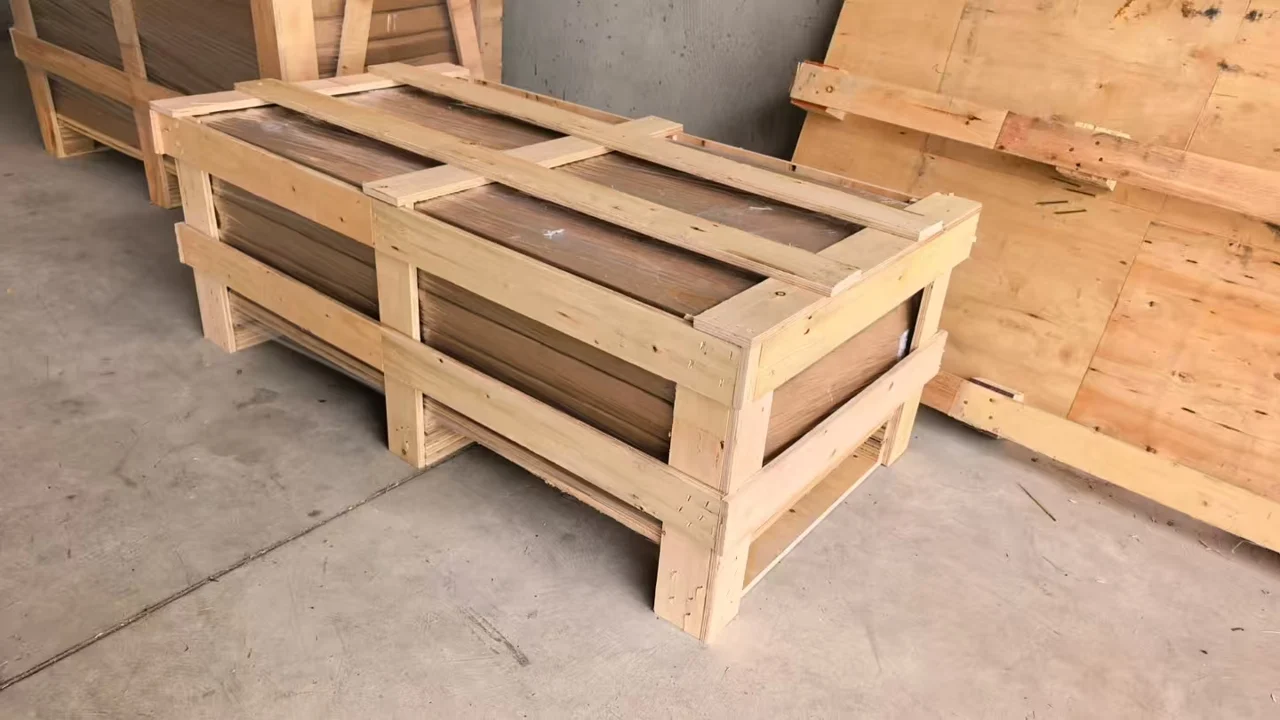
Export packing should protect the product and make it possible to identify every component on arrival. For a mixed building material order, the packing plan needs to account for different weights, fragile surfaces and installation sequences. A cabinet, mirror and tile pallet cannot be treated as interchangeable boxes.
Agree the packing method before the final freight calculation. Reinforcement can change the package dimensions and gross weight, which affects transport planning and receiving equipment.
Start with a product specific packing schedule
Ask the supplier to describe how edges, corners, glass, exposed finishes and moving parts will be protected. Request handling instructions for large slabs and heavy assemblies from the manufacturer. The loading plan should avoid placing unsuitable loads on fragile products.
For furniture, identify removable legs, modules and hardware packs. For bathroom cabinets, record whether the top, basin and mirror travel separately. For tiles, preserve batch and shade identification so boxes can be allocated correctly at the site.
Match every package to the project
Use a consistent label containing the project reference, item code, room or installation location, package number and handling information. A notation such as “Bathroom 2, vanity, package 2 of 3” is much easier to reconcile than a general product name.
The packing list should connect these labels to quantities, package dimensions and gross weights. Check that the commercial documents describe the actual goods consistently. Include small accessories in the schedule; an unlisted connector or fitting can be difficult to trace later.
Check wooden packaging requirements
For shipments entering the United States, APHIS requires regulated wood packaging to meet treatment and marking requirements under ISPM 15. This does not mean that all solid wood packaging is prohibited. Review the APHIS import guidance with the packing provider and forwarder.
The relevant question is whether the actual pallets, crates and dunnage comply with the destination requirements. Do not rely on the description “export wooden crate” without checking its construction and required marks. Other destinations need their own current import checks.
Record condition before dispatch
Agree which inspection photographs are needed before packages close. Useful records include item labels, visible finishes, protected corners, accessory packs and the packing arrangement. Record package counts and loading details against the final list.
For a patterned tile order, retain the approved layout and face references as well as the number of boxes. An undamaged shipment can still cause problems if the installer cannot identify the intended arrangement.
Prepare for receiving and exceptions
Give the receiver a copy of the packing list before arrival. Allocate people, equipment and dry storage appropriate to the shipment. Document damaged packaging and follow the agreed reporting procedure promptly, keeping packaging and product photographs available for investigation.
Agree spare materials according to the design, cutting plan, handling risk and maintenance needs. A fixed percentage is not suitable for every tile layout, and extra pieces must include the correct faces or matching finish where those matter.
Can accessories be packed inside cabinets?
They may be, if the packing plan secures them and the packing list identifies their location. Loose, unrecorded parts make inspection and installation harder.
When should packing be confirmed?
Confirm the method before freight is finalized and before the supplier closes the packages. Send the destination and site unloading details with the order so packaging and receiving can be planned together.
Check the packing plan before dispatch
| Item | Ask the packer to show | Record on the packing list |
|---|---|---|
| Tiles | Carton condition, pallet protection and visible batch labels | Item, batch, pieces and cartons |
| Cabinets | Protected corners, secured moving parts and identified hardware packs | Room, cabinet number and separate components |
| Basins and mirrors | Protection appropriate to fragile surfaces and edges | Matching cabinet or bathroom reference |
| Large slabs | Manufacturer's support and handling arrangement | Package size, weight and handling instructions |
- Check package numbers against the final item schedule.
- Confirm that handling marks remain visible after wrapping.
- Send the receiving team the packing list and agreed damage-reporting procedure before arrival.
Explore products for your project
Bring the right details to your enquiry
Share your project location, plans and the product decisions you are working through.
Discuss your project ↗