Window Test & Certification Documents: US vs Australia
Match every window document to the offered assembly and the project location. Energy ratings, structural and weather evidence, glazing information and installation details answer different questions.
An evidence package belongs to a defined assembly. Product changes need a new scope check.
Identify
Match manufacturer, model and opening ID across quote and drawings.
Configure
Record action, size, frame, glass, seals and hardware.
Match
Read the report or listing ID, relevant pages and limitations.
Review
The nominated local reviewer records gaps, clarifications and the decision.
Technical record / evidence hierarchy
Four layers of evidence. One offered assembly.
Evidence layer
What it can describe
What still needs matching
Profile / frame
Profile geometry and stated material or finish.
Complete window system, dimensions, reinforcement and opening action.
Glass / glazing unit
Glass build-up and the stated scope of glass or unit evidence.
The frame, seals, hardware and complete assembly using that glazing.
Whole window
Model-specific listing, label, certificate or test-report scope.
Offered size or covered range, configuration and limitations.
Project / installation
Site design criteria, fixing and interface details.
Applicable local requirements, approved installation and reviewer decision.
A profile supplier’s brochure or a glass report does not by itself demonstrate that the offered whole window meets the project requirements. Changes to glazing, hardware, size or opening action need an evidence-scope review.
Official guidance / document checks
What to look for on the actual documents.
United States / NFRC
Match the label and listing.
Use the manufacturer and product identifiers to check the relevant NFRC listing and ratings. Resolve missing or inconsistent labels with the manufacturer or NFRC. Keep structural, weather, safety-glazing and installation evidence as separate review items.
NFRC ratings support comparison of product energy performance. U-factor concerns heat transfer; SHGC concerns solar heat gain. Check the exact certified product and configuration in the NFRC directory, and confirm the required project values separately.
AGWA identifies manufacturer identification, serviceability and ultimate wind pressures, and water-penetration resistance as minimum label or certificate information. Ask for supporting reports and have the local reviewer assess the covered assembly against the project criteria.
AGWA identifies AS 1288 for glass selection and installation. Ask the local reviewer to identify the applicable glazing and energy requirements as separate items; do not treat an AS 2047 reference as a thermal rating.
Have the project reviewer identify the applicable standard edition, building requirements and approval pathway for the selected window.
01 / identify the complete assembly
Connect profile details to the complete assembly.
Start with the offered system and the complete opening schedule. Keep frame, glass, hardware, opening action and dimensions connected to the document being reviewed.
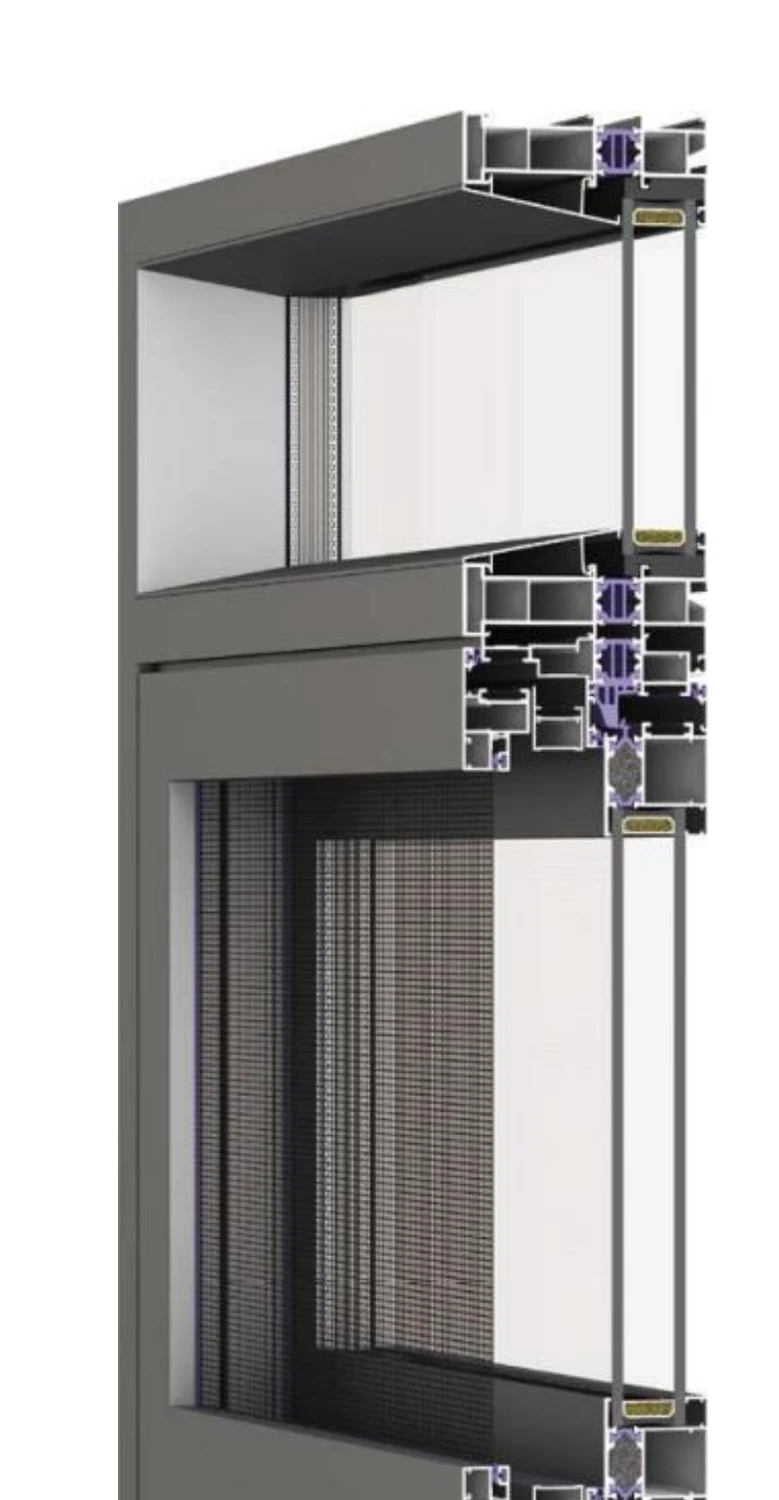
Frame profile and insulation detail
Request an assembly record.
Manufacturer and system identifier.
Opening action and overall size or covered range.
Frame, glazing build-up, seals and hardware.
Report or listing ID, scope and limitations.
Project location, installation detail and local reviewer.
A similar profile or a glass-only result is not enough to establish a match for the offered whole window.